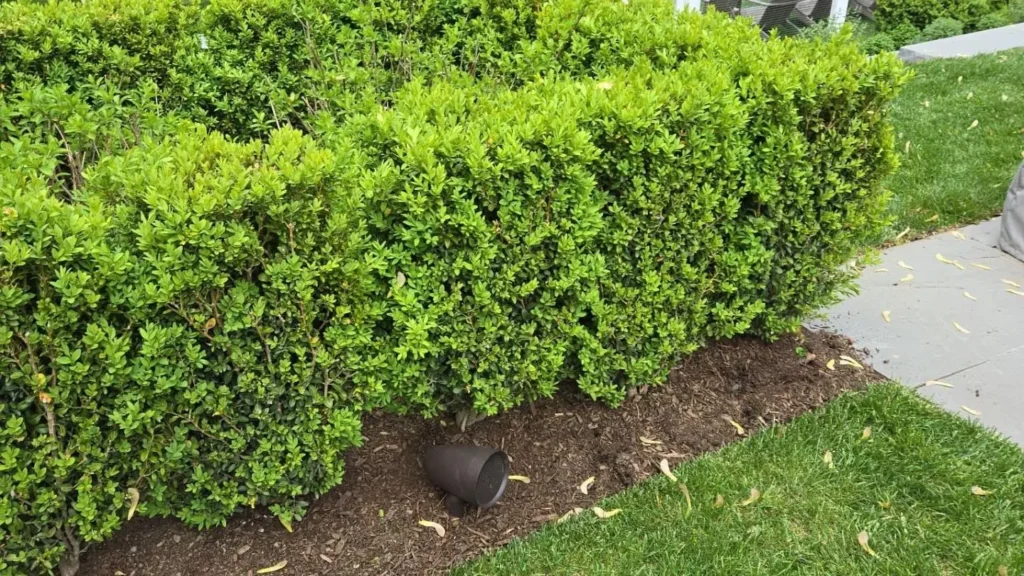
Many homeowners who ask us about Sonance landscape speakers have already seen or heard a demonstration and want to know one thing: Will they work well in my yard? In most cases, the answer is yes. The right Sonance outdoor speaker system depends on the size of the area, how the property is laid out, and how you want to use the space. As a Sonance authorized dealer and installer, Blue Hour Lighting has hands-on experience with both the design and installation of Sonance outdoor audio systems.
This guide explains the different Sonance outdoor speaker options, where each system is best suited, how coverage is determined, and the factors that influence the overall cost of a professionally installed system.
How Sonance Outdoor Speakers Are Built
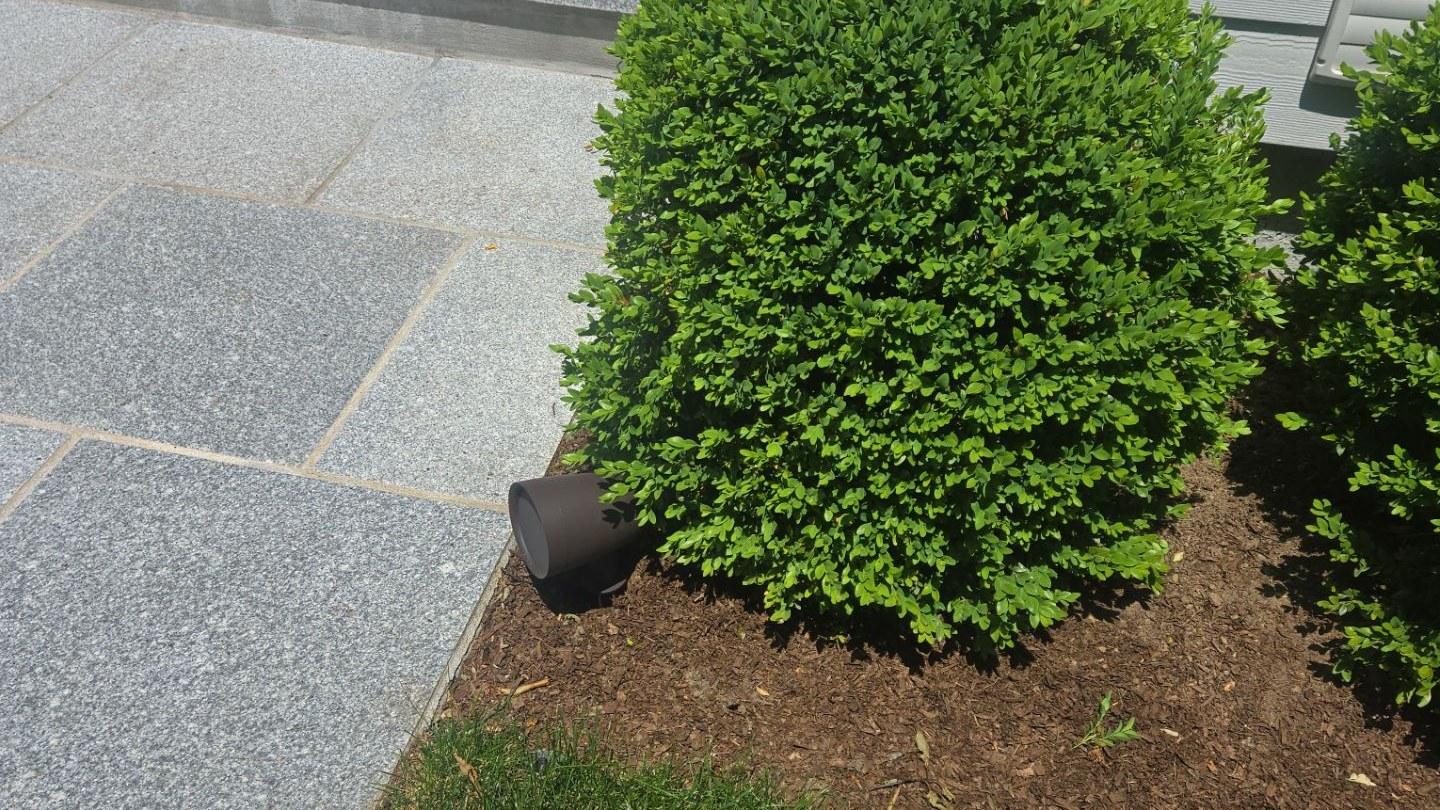
All three speaker systems share the same basic idea. Small satellite speakers go on stakes and hide in the planting beds, and a subwoofer is buried in the lawn with only a vent cap showing. The satellites handle voices and clarity, while the buried woofer fills in everything underneath. Since people move around, the speakers form a ring, and each one only has to work at conversation level.
Outdoor audio can quickly become distorted when too few speakers are asked to cover a large area at high volume. A properly designed system distributes sound across multiple strategically placed speakers, allowing each speaker to operate efficiently while maintaining consistent, balanced coverage.
The result is clear, detailed audio at both low and higher listening levels. Music remains enjoyable without overpowering the space, allowing you to comfortably carry on a conversation while still hearing the music throughout the area.
Choosing the Right Sonance Series
Patio Series: Small Zones
For a fire pit, a hot tub, or a small patio, the Patio 4.1 is usually plenty, with four staked satellites and one buried subwoofer, covering about 1,000 square feet with a single amplifier. For a bit more reach, a larger amplifier lets you add satellites up to eight, plus a second subwoofer, but past that point, you’re better off moving up a tier.
Specs: 3.5″ aluminum satellites with Santoprene surrounds, 8″ dual-voice-coil subwoofer, Sonance SR 2-125 DSP amplifier.
Garden Series: Most Residential Yards
This is the one we specify most and probably what you picture when you imagine outdoor speakers. The SGS 8.1 pairs eight satellites with a single buried subwoofer, covering up to 3,500 square feet, enough for a normal backyard with a patio, a pool, and a lawn. It expands further if you need it, but for most homes, this is the right answer.
Specs: 3.5″ aluminum satellites with 0.75″ polyurethane dome tweeters, impedance matched at 8 ohms to run on one two-channel amplifier, 10″ dual-voice-coil subwoofer, expandable to 16.2.
Landscape Series: Estates and Long Runs
This tier exists for one reason. Distance. Once the far corner of a property is a long walk from the amplifier, standard wiring starts to struggle, so the Landscape Series switches to commercial-grade 70V/100V wiring. It’s built for scale, larger speakers, and more subwoofer options, including one designed to be installed inside hardscape, and equipment rated to handle it all outdoors, year-round.
Specs: LS4T (4.5″ woofer) and LS6T (6.5″ woofer) satellites, LS12T/LS15T/HS12T subwoofers, IP66 rated, PowerZone Connect amplification, 20Hz–55Hz frequency range.
Here is an easy way to pick between the three:
- Patio Series. Designed for one small area.
- Garden Series. Covers a normal residential yard, and it’s where most homes land.
- Landscape Series. Built for properties where distance is the real challenge.
Why 70V Matters Once a Property Gets Big
For smaller properties, traditional speaker wiring is typically sufficient. As the distance between the audio equipment and speakers increases, however, signal loss can become a concern. Speakers located farther from the amplifier may produce lower volume levels than those closer to the equipment, and compensating with larger-gauge wire can increase installation costs.
For larger properties, a higher-voltage audio system provides a more efficient solution. The increased voltage allows the audio signal to travel greater distances with less power loss, while each speaker uses a transformer to convert the signal to the appropriate level. This approach provides more consistent sound across larger areas and makes it possible to effectively cover expansive properties without excessive wiring requirements.
This setup needs the right equipment and someone who sets it up properly. Beyond better sound, adding another speaker later doesn’t require redoing the whole system, another reason estates end up with the Landscape Series.
Speaker Count and Placement
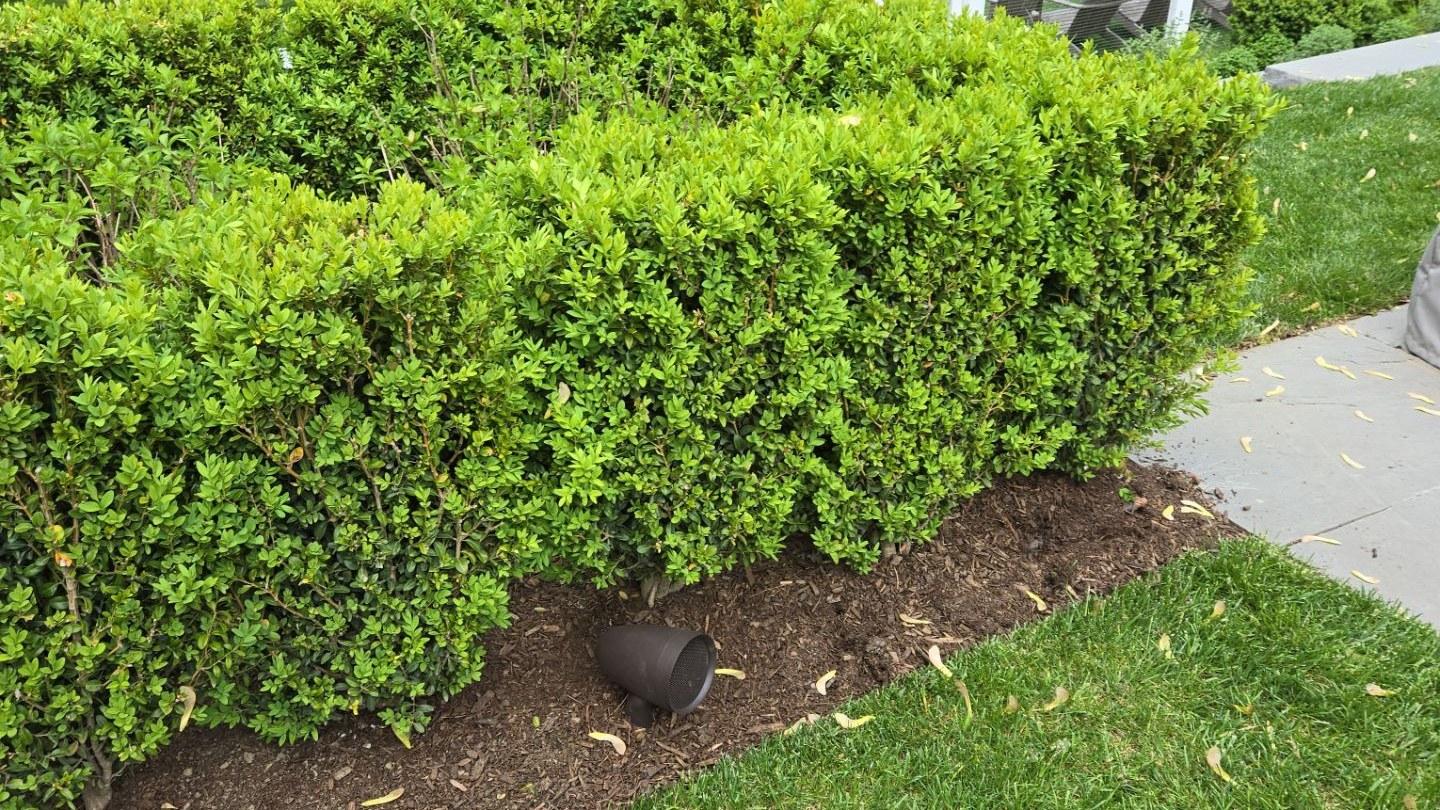
One of the most common mistakes in outdoor audio design is using too few satellite speakers and compensating by increasing the volume. Unlike indoor spaces, outdoor environments have no walls or ceilings to contain and reflect sound, so audio naturally dissipates over distance. A well-designed system instead distributes sound across multiple speakers operating at lower volume levels, creating more consistent and balanced coverage. Eight satellites at a moderate volume are better than four at higher volumes, and your guests will notice the difference.
As a general guideline, satellite speakers can be spaced approximately 25–30 feet apart along the areas where people gather and move through the property. Positioning them at an appropriate height within the landscape and directing them toward the primary living areas helps create an even listening experience while minimizing sound directed toward neighboring properties.
What Determines the Price
Blue Hour Lighting doesn’t publish figures because the estimate depends on the property. Here are the elements that factor into project scope and the final price:
- Zone count. Two independently controlled areas need more amplifier channels than one.
- Wire run length. Distance from the amplifier to each speaker and whether the route crosses a driveway or a patio.
- Trenching conditions. An open lawn is straightforward. Mature root systems, established beds, and existing hardscape are not.
- Amplifier tier. A basic two-channel amp and a multi-zone PowerZone Connect system are different products.
- Whether lighting is going in at the same time. One trenching pass for both lighting and audio is the single easiest way to save money on an outdoor audio project.
That last point is worth planning around. If landscape lighting is anywhere in your future, running the audio at the same time avoids opening the same trench twice.
Getting the Layout Specified Properly
Sonance’s coverage ratings assume an open rectangle, but real yards have slopes, hedges, pool equipment, and property lines that get in the way. That’s why we walk the site, mark where people gather, and plan satellite positions alongside the lighting.
Most of the questions we get are really about two things: coverage and visibility. Both are easy to answer in person and nearly impossible to answer over email. When you’re ready, we’ll walk the property and put a speaker plan together for you to approve before any work starts.
Blue Hour Lighting installs Sonance outdoor speakers across Putnam, Westchester, Dutchess, and Rockland counties, Greenwich, Connecticut, and more.
Learn more about our outdoor sound system design and installation. If you want to go deeper, our guides cover Outdoor Speaker Placement and In-Ground Subwoofers Explained. If you’re interested in the possibilities for your own yard, request a free consultation.